
The mandate
to imagine.
Why cities are asked to deliver the future but rarely allowed to imagine it — and how we repair that. Ten chapters. Scroll, one point at a time.
Cities have no mandate to imagine the future
Thinking about the future is, almost nowhere, in a planner’s job description. Planning law is built to administer — check, zone, permit, archive — not to test and choose between futures. “The urgent eclipses the important,” trapping cities in cycles of reaction.
The warning sign: Ireland now lists town planning as an official shortage occupation — 62% of authorities struggle to recruit and retain planners.
No mandate to imagine
Planning is built to administer — zone, permit, archive — never to picture and choose between futures.
Yet the pressure to transform has never been higher
Paris, the New Urban Agenda, the EU Green Deal, the European Climate Law, the Mission on Adaptation. National adaptation strategies rose from 20 to 32 countries in a decade; Covenant of Mayors signatories grew from a few hundred to over 4,500.
The mandate to deliver the future keeps growing. The mandate to imagine it does not.
 A decade of escalating commitments, 2013–2023. Source: European Environment Agency.
And the shared capacity to act together is thinning
In society, algorithmic curation splits the public into separate informational worlds and trust erodes. Inside the municipality, departments run in silos, budgets tighten, and staff are too busy operating the present to imagine the future.
A fraying common ground
Society splits into separate worlds; inside the institution, departments work in silos.
A decade of escalating commitments, 2013–2023. Source: European Environment Agency.A mandate that is missing. An urgency that is mounting. A unity that is fraying.
This is the gap CoPlanAI is built for — the connective layer that lets a city, its institutions and its people imagine and choose a future in public, together.
Agents that synthesise, so people don’t transcribe
The hours we save are the manual ones: agents cluster, theme and summarise thousands of contributions. Officials review the synthesis instead of compiling it — the judgment stays human, the clerical work doesn’t.
“We want to save hundreds of hours a month with AI.”
Agents that synthesise, so people don’t transcribe.
Agents represent the absent — never the public
We tune agents to stand in for the people who can’t be in the room — children, future residents, the species a plan overlooks — and to stress-test scenarios. The living public’s voice is the one thing we will not automate away.
“Can we replace participants with AI agents?”
Agents represent the absent — they never replace the public.
A plan becomes options people can react to
A site plan turns into explorable, supervised scenarios — not one hero render to admire, but variations citizens and professionals can compare, contest and rate. The image becomes an instrument for a decision, not decoration for one already made.
“Give us a site plan and turn it into renders.”
A plan becomes options people can react to.
Deliberation at the scale of a whole population
The same generative loop runs online, between in-person sessions — reaching thousands who would never attend an evening workshop. Not a comment box: people propose, see consequences and converge, asynchronously, at city scale.
“Automate the online participation — we’d subscribe yearly.”
Deliberation at the scale of a whole population.
A documented mandate, not a comment count
Because every participant worked the same images and votes, the output is a ranked, visual, deliberated record of what a community can agree to want — defensible to a council, bankable to a developer, auditable later.
“Make our consultation results defensible to elected members.”
A documented mandate, not a comment count.
Policy pre-evaluation, while change is still cheap
Agents score each scenario against EU policy, the local design guide and city strategy as it is made — surfacing conflicts early, when an image is easy to change, instead of as a veto at the end of an expensive process.
“Check designs against our policy before anything goes public.”
Policy pre-evaluation, while change is still cheap.
Three moves, one method
Critique — fully automated processes optimise the existing mandate and inherit every blind spot of the system they accelerate.
Repair — restore what planning lost on its way to proceduralism: seeing consequences before deciding, hearing the voices the process excludes.
Innovate — a projective instrument: futures made visible, debatable and choosable.
Critique
Name what automation missesFully automated processes optimise the existing mandate — permits, compliance, throughput — and inherit every blind spot of the system they accelerate.
Repair
Put back what process lostUse generative AI to restore what planning lost on its way to proceduralism: seeing consequences before deciding, and hearing the voices the process excludes.
Innovate
Dream · imagine · futureGive cities a projective instrument — a way to make futures visible, debatable and choosable. A new institutional capacity to imagine in public.
…and every innovation invites its next critique.
Where the three roles meet: coplanning
Stakeholders, institutions and AI agents each bring something different. Coplanning is the overlap — and AI never holds the pen alone: every generative step is wrapped in a human step. Propose, then judge; render, then decide.
The output of a workshop is not a design. It is a mandate — documented evidence of what a community can agree to want, which professionals then translate into technical design.
Interactive diagram. Use Tab to move between the three roles, their overlaps and the centre; the description panel updates for each.
1 · Sense
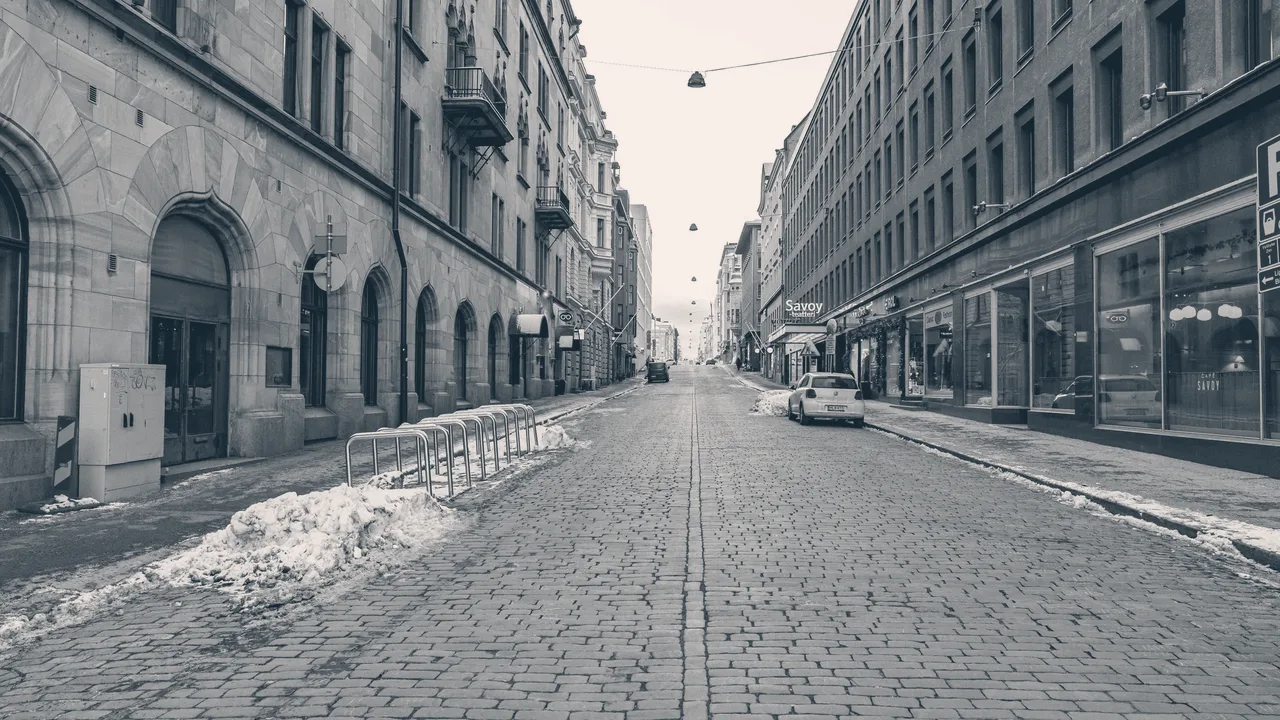
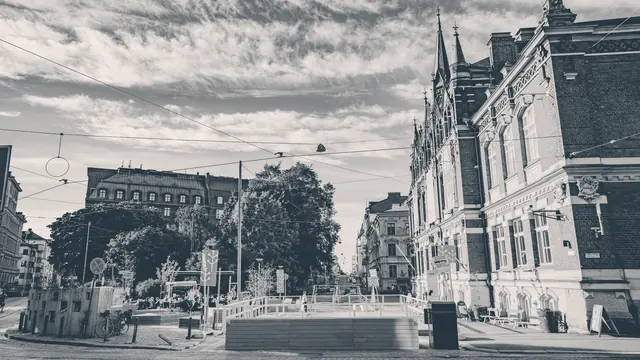
January 2023. A photo of a real street — the only input citizens need to start.
 Kasarmitori area street in winter, Helsinki.
2 · Decide
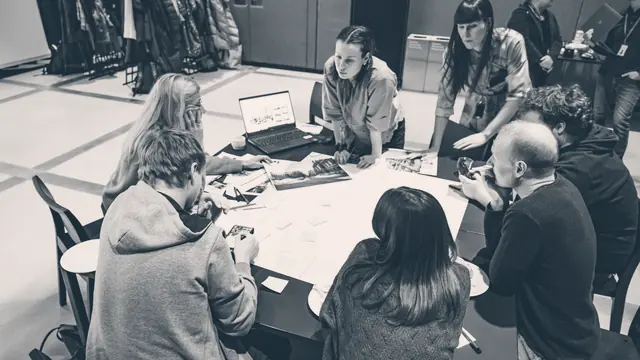
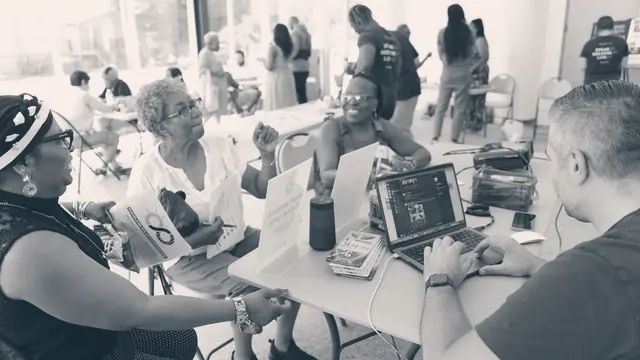
A citizen committee and entrepreneurs generate, debate and vote — in one room, around one table.
 Citizens and planners co-designing around one table.
3 · Act
June 2023. The street as built — Helsinki Summer Streets, with the City of Helsinki.
 The built summer street — parklets and greenery.
The sequence we all know too well
The ballot-box model is the wrong template for design: you choose once, blind, and live with it. Participation, then discontent, then demolition — conflict surfaces after the money is spent.
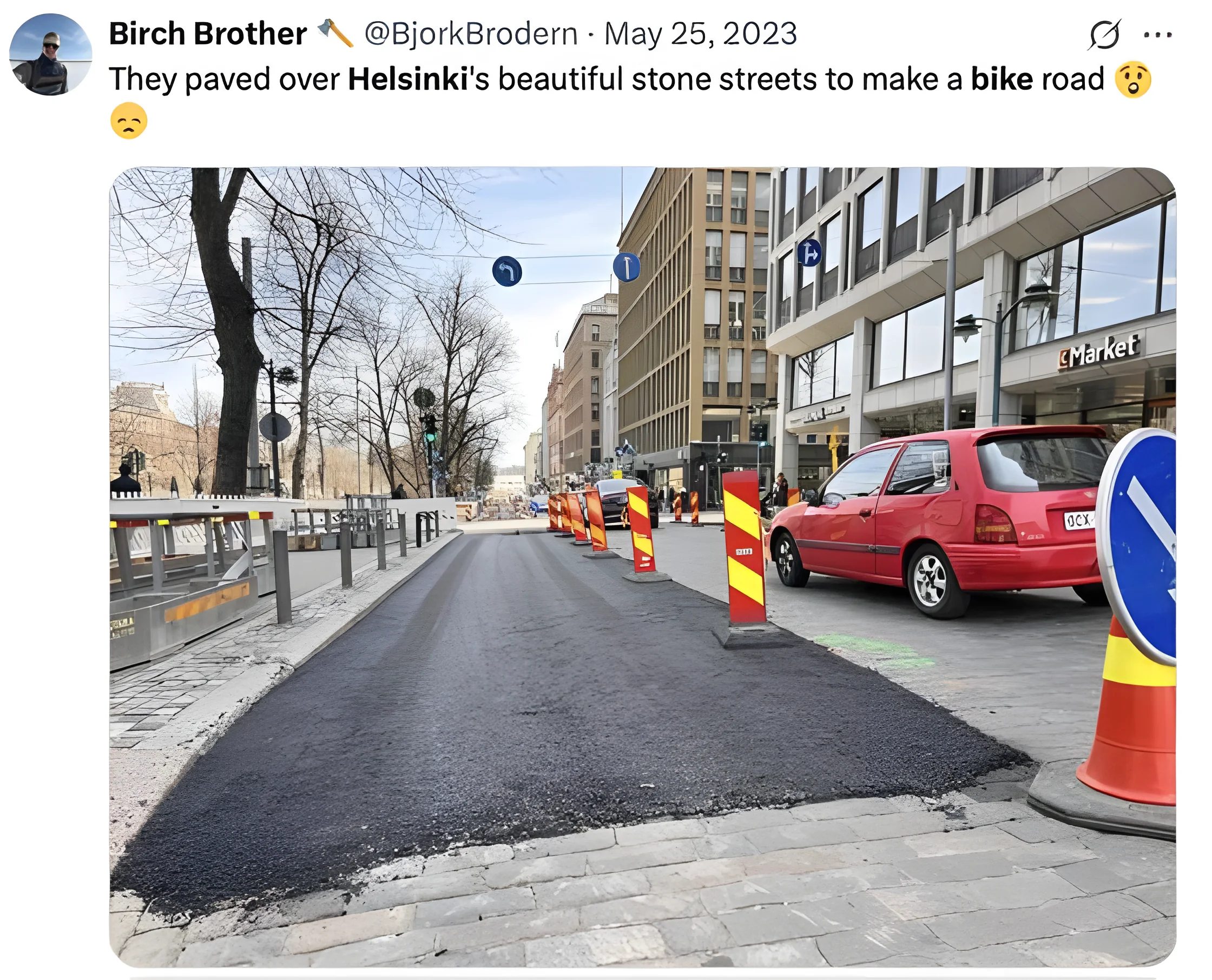
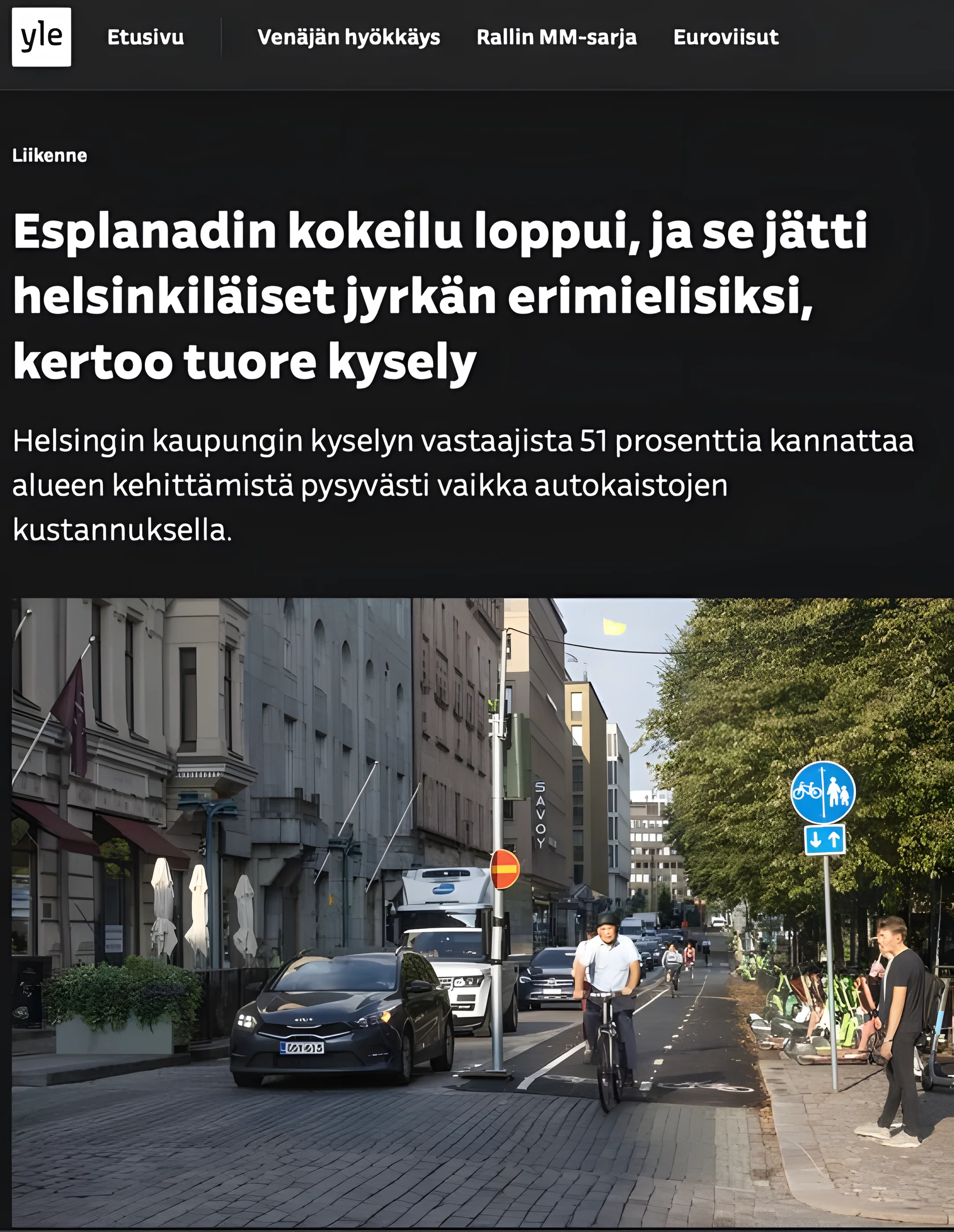
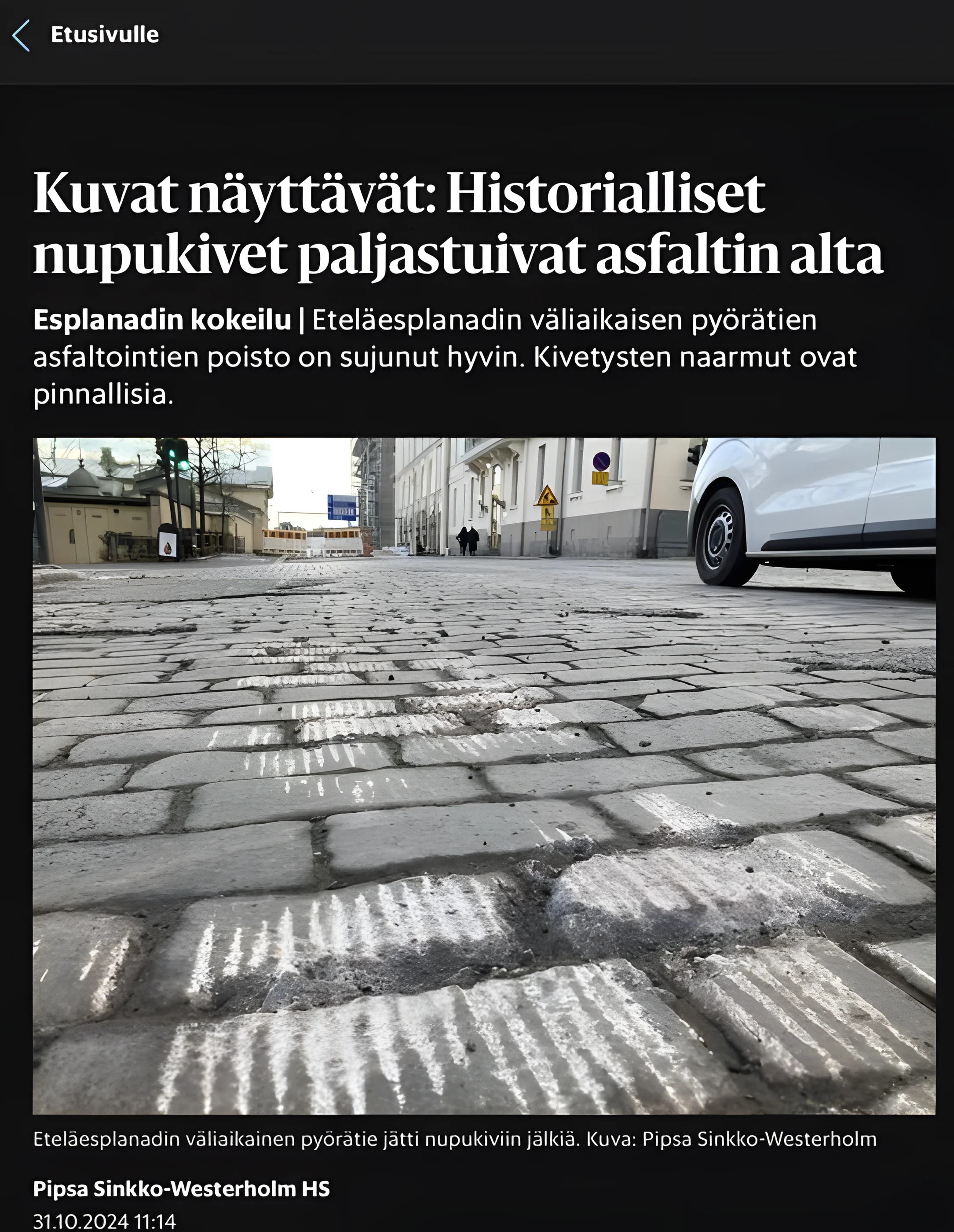 Kasarmitori area street in winter, Helsinki.Citizens and planners co-designing around one table.The built summer street — parklets and greenery.
“The value of participation is not in deciding what most people want, but in discovering what we could want, together.”
CoPlanAI — working principle. In Helsinki, first instincts evolved once people could compare consequences together. That evolution is the democratic act.
The Hippocratic Oath of working with AI
Bringing AI into a planning organisation is not a tooling decision — it transforms the institution. So the institution owes itself an explicit ethic. We ask every partner organisation to write their own.
Four commitments
Four commitments
Drag CoPlanAI across the fractures
The three institutional fractures from chapter 01, photographed as the administered file sees them. One connective layer passes through — and whatever it passes, it repairs.
 Fracture 01 · Mandate
No mandate to imagine
Planning is built to administer — zone, permit, archive — never to picture and choose between futures.
Imagination as a standing capacity
The office gains a repeatable way to think forward — not a one-off exercise.
HowFrom a single photo, generate and compare real futures in public — supervised, never automated.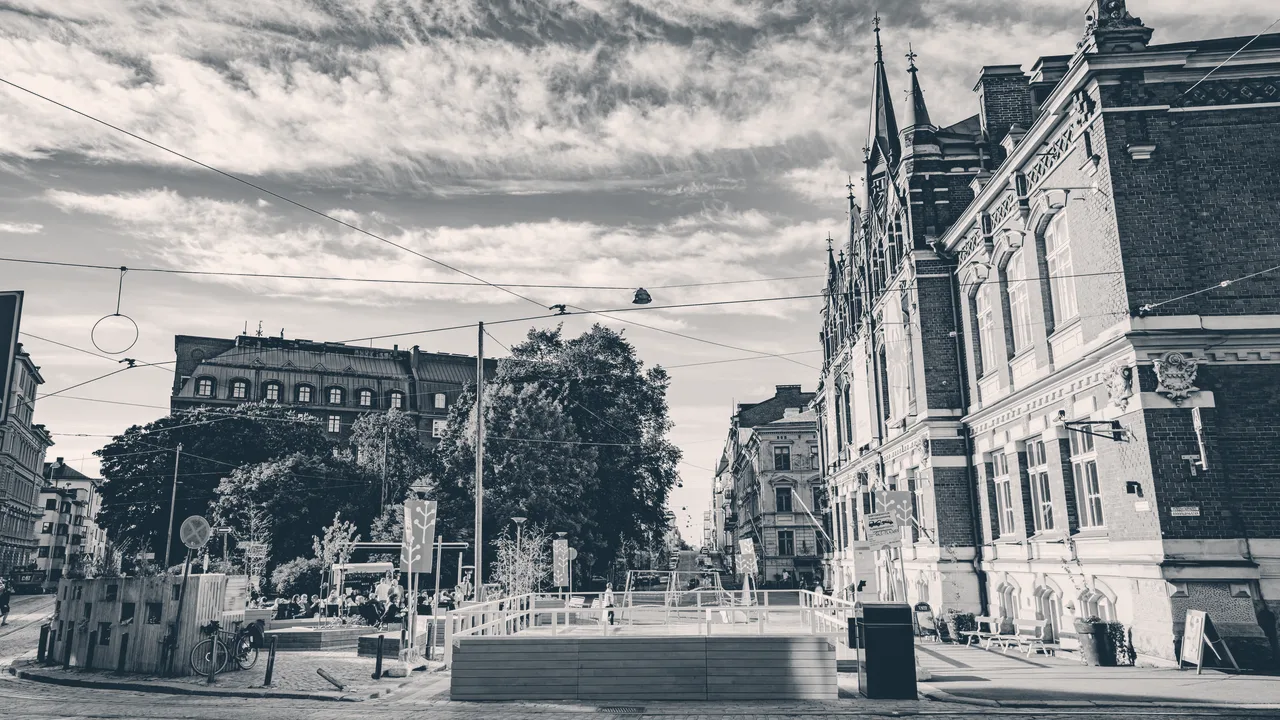
 Fracture 02 · Urgency
No capacity to match the urgency
Climate, social and economic pressure mounts faster than an overloaded, rule-bound office can respond.
Movement at the pace the crises demand
What used to take survey cycles lands in days, with a documented mandate.
HowImagine, test and decide inside one workshop — agreement front-loaded, late-stage rework cut.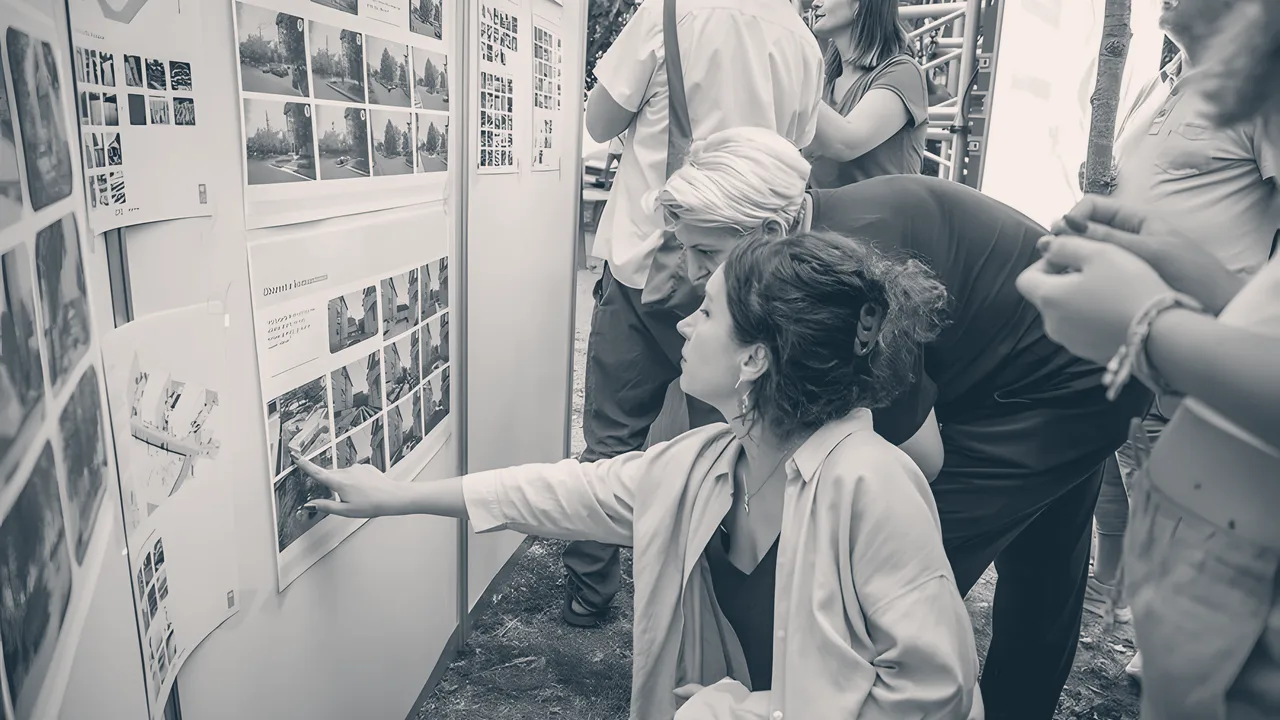
 Fracture 03 · Unity
A fraying common ground
Society splits into separate worlds; inside the institution, departments work in silos.
A connective layer to act together
People and departments aligned around one picture they all helped make.
HowCitizens, officials and departments work the same images and the same evidence at once.One pass, three repairs — the same connective layer mends all three at once.
← drag the bar · or click anywhere on the band
One platform, one repair. The cases that follow show it in practice, starting with the people planning most often leaves out.
From commentators to placemakers
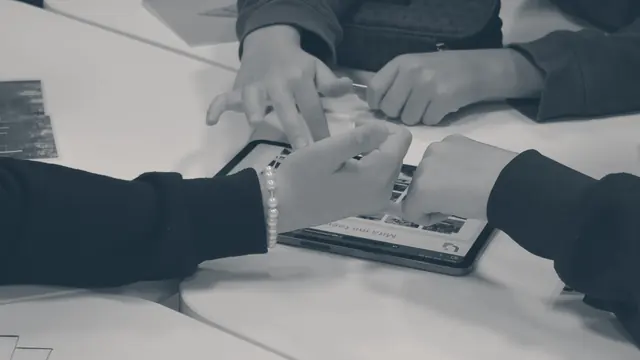
Children 6–14. With an Architects’ Council of Europe research grant we built a child-specific participatory AI — drawing-guided for the youngest, tablet co-design for the oldest — piloted in Finnish schools with Tampere University and at Milan Digital Week.
 Analog ideation → digital ideation → deliberation.
Exploring climate futures with the young
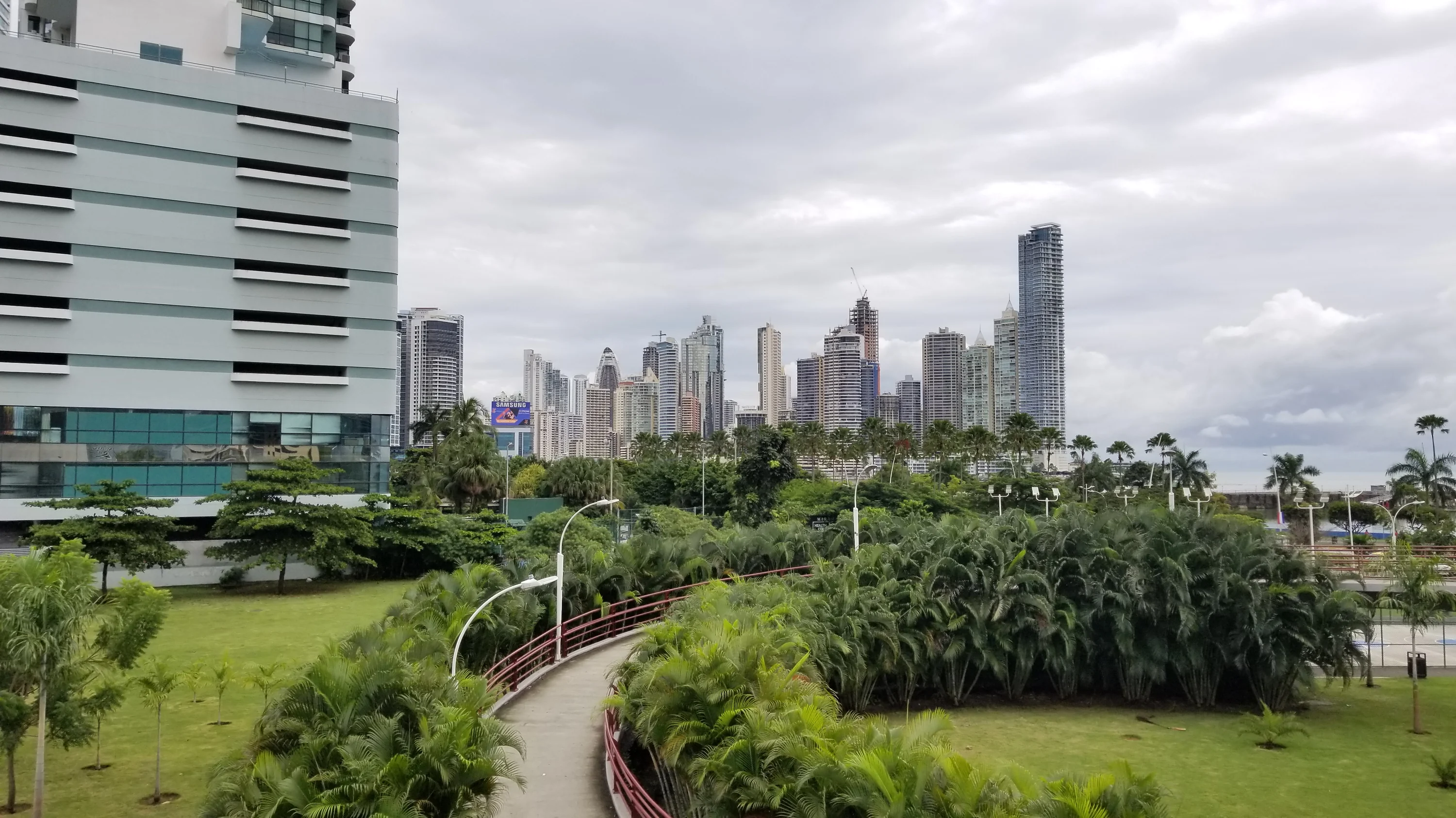
UNDP Accelerator Labs Panama ran workshop series with several hundred participants from local high schools and universities — turning photographs of their own waterfront into climate-adaptation scenarios they could debate and own.
 Panama City — climate-adaptation scenarios by youth workshops.
Parameters beyond people
People tend to think people-first — or people-only. At BiodiverseCity? (Estonian Museum of Natural History, Tallinn), a tuned model let children explore what European greening policies mean: communal areas reimagined as wilder, more biodiverse habitats.
 BiodiverseCity? — Tallinn, European Green Capital 2023.
Not a render to admire — a proposal to examine
Drag the handle. The site as participants photographed it — and as the youth groups proposed it: a proposal to examine, contest and own.
 Current photographAI scenario
The honest caveat — customisation is also a new bias
Every tuned agent over-represents some features and under-represents others. Choosing a bias is choosing whose city gets imagined more easily — so we treat bias curation as design work, done in the open.
Four practices

 Analog ideation → digital ideation → deliberation.Panama City — climate-adaptation scenarios by youth workshops.BiodiverseCity? — Tallinn, European Green Capital 2023.Current photographAI scenario
Four practices
Scored against EU policy and the local design guide
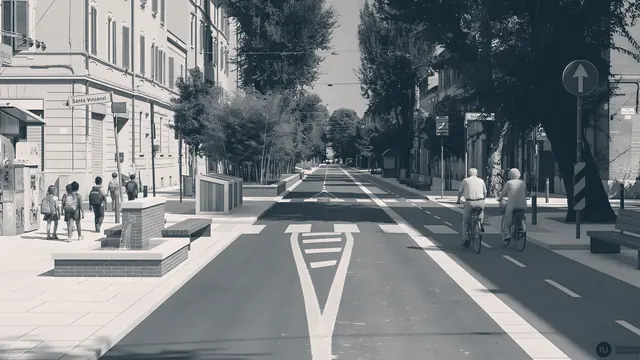
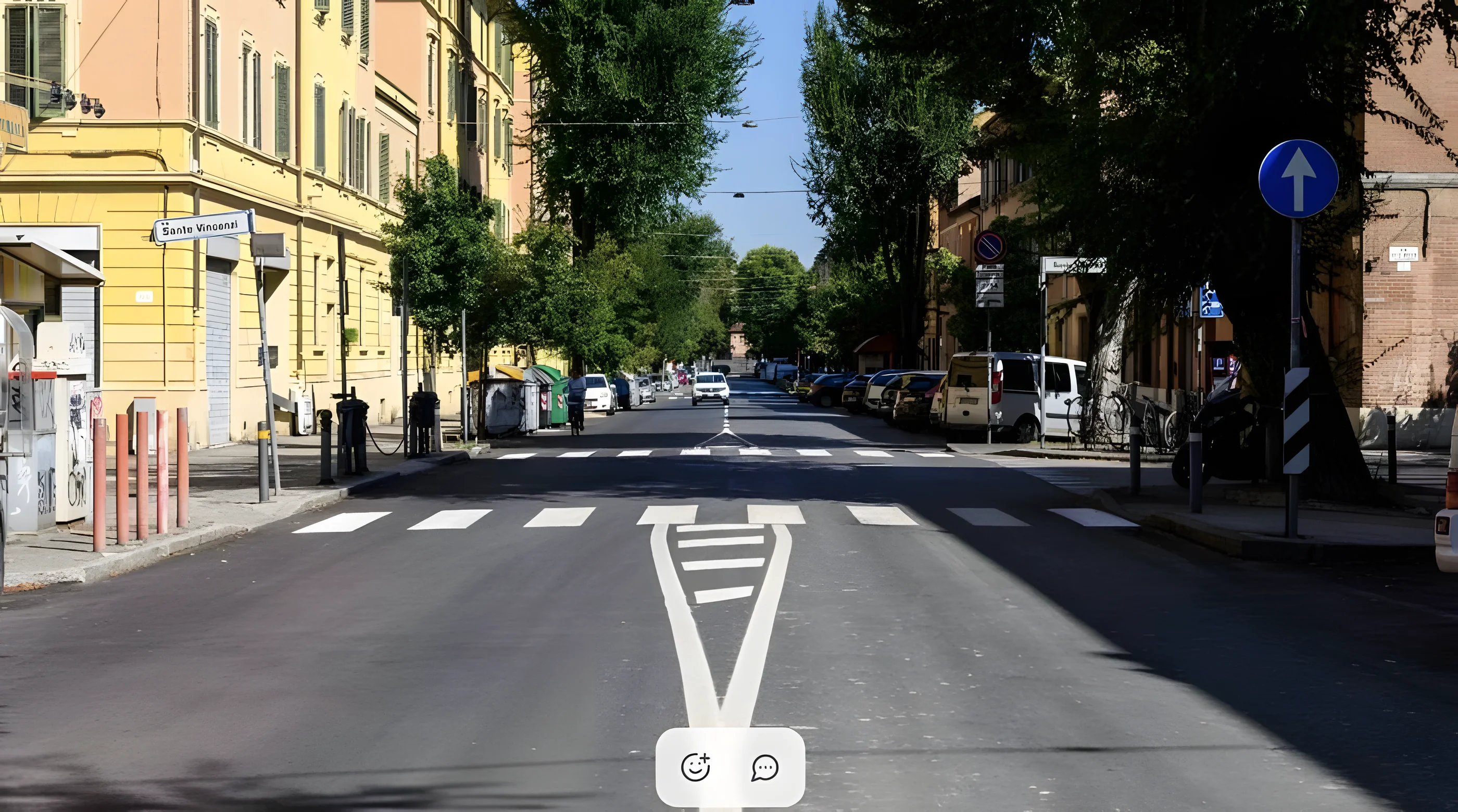
Bologna Verde, 2026 — with the Comune di Bologna, citizen scenarios for greener streets are evaluated by agents trained on EU policy and Bologna’s own catalogue of permeable, vegetal and mineral materials — checked while imagination is still cheap to change.
 A citizen scenario — greenery and a red cycle lane.
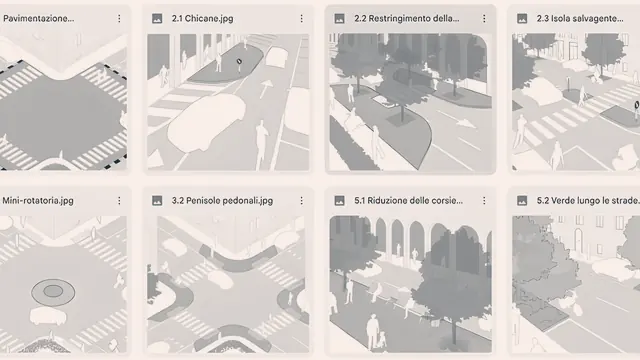
The design guide becomes evaluation criteria
Architectural quality enters the loop as data, not as a veto at the end. The city’s own catalogue of materials and solutions is what the agents score against.
 Tiles from Bologna’s nature-based-solutions design guide.
Testing a city model block by block
For the City of Vienna’s Supergrätzl programme, scenario evaluation helps planners and residents see how the model lands on specific streets — cooler, calmer, more playable — before commitment. Also in evaluation practice: Dubai Municipality, with planning law in the loop.
 The superblock model, tested in the city’s own visual language.
The same street, twice
Bologna Verde — the street as residents photographed it, and as the workshop reworked it, then scored against EU policy and the local design guide.
 Street as foundCo-designed scenarioA citizen scenario — greenery and a red cycle lane.Tiles from Bologna’s nature-based-solutions design guide.The superblock model, tested in the city’s own visual language.Street as foundCo-designed scenario
Trust as infrastructure
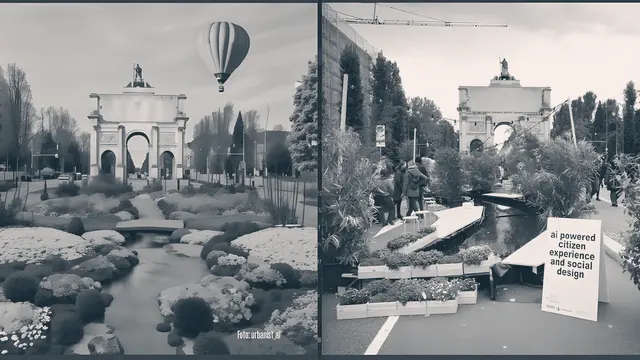
Munich · Zamanand Festival. 3,000+ ideas submitted, ~300 votes cast on reimagining the public space around the Siegestor — a festival-led experiment in rebuilding trust through social imagination.
 The Siegestor, reimagined — 3,000+ ideas, ~300 votes.
Residents design a future park
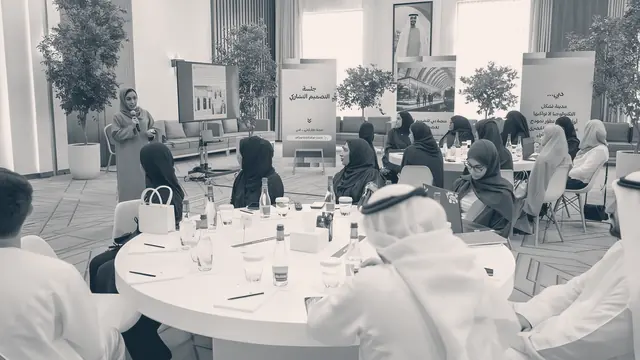
Dubai Municipality · UAE. Co-planning sessions where residents shaped an interactive play area and shaded cycling track — alongside our compliance-aware generation work with planning law in the loop.
 Dubai Municipality co-planning session.
A city-centre vision, co-planned
Lahti · Finland. A co-planning process feeding directly into the municipal strategy document — collective imagination given formal standing in the city’s most official text.
 The city centre by the lake — vision feeding strategy.
Co-designing a capital city
Nusantara · Indonesia. Local communities co-designing the future capital — participatory AI at the most consequential scale there is: a city that does not exist yet.
 A green low-rise neighbourhood for the new capital.
Regenerating Biloku, together
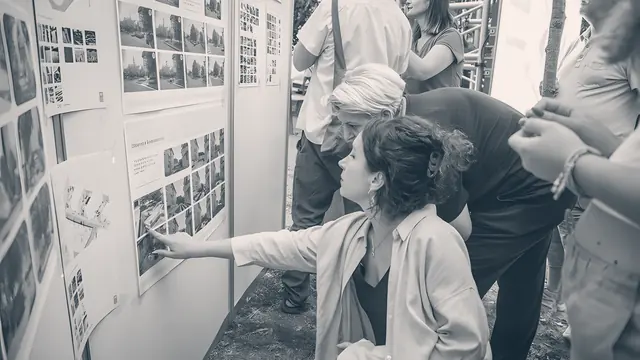
Pristina · Kosovo. A UNDP-led regeneration of a housing complex’s public spaces, with the mayor’s office at the table — participatory AI in a post-conflict planning context.
 Residents reviewing design boards at the Biloku workshop.
Reimagining vacant spaces
East Cleveland · USA. Seventh Hill’s Connect East Cleveland initiative — open-house co-design for vacant lots in a US disinvestment context, community-led from the first photograph.
Also: Helsinki (EU Best Case Award) · Zürich · Berlin · Tallinn · World Government Summit · HafenCity University Hamburg.
 Open-house co-design with tablets.
The same conclusion, reached independently
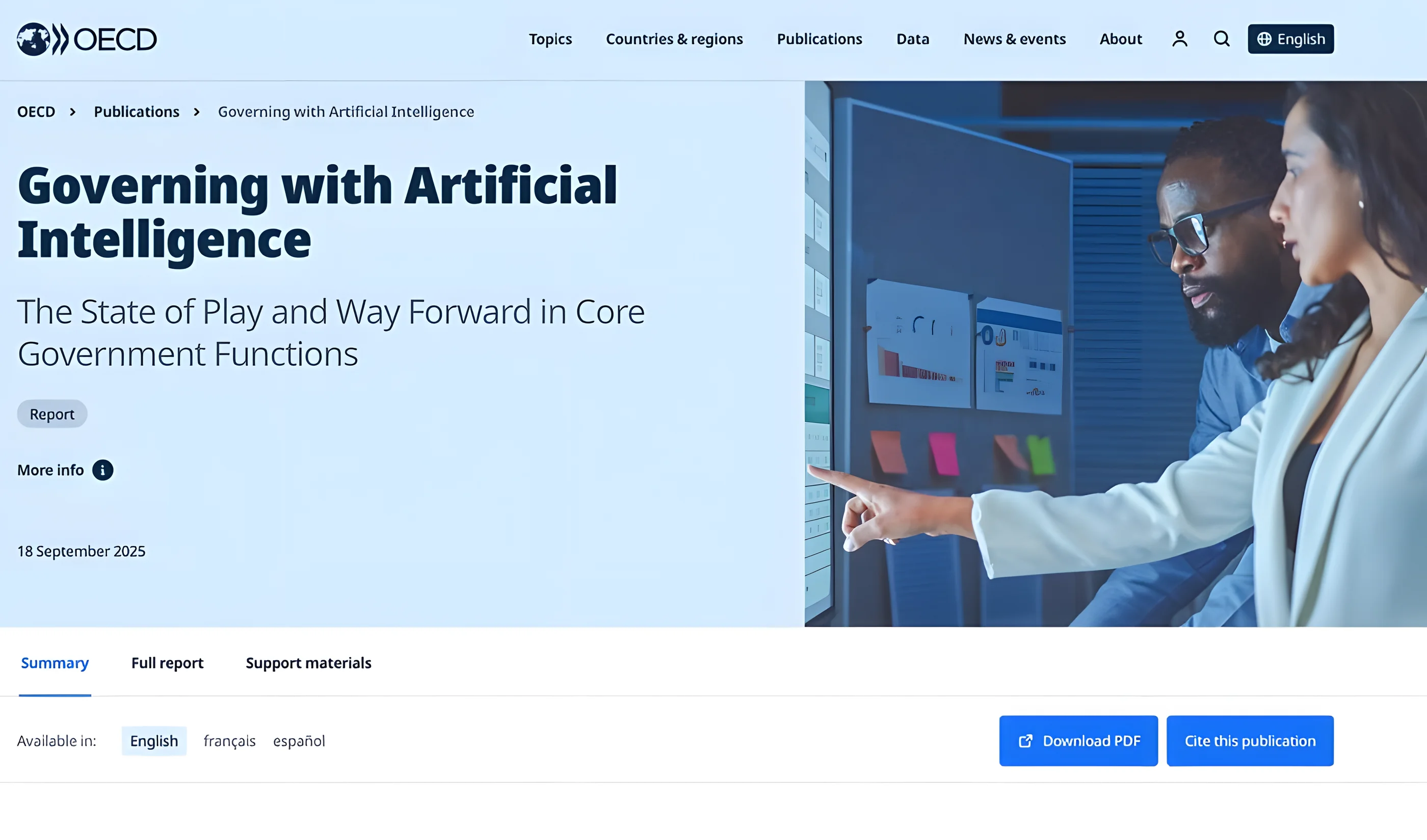
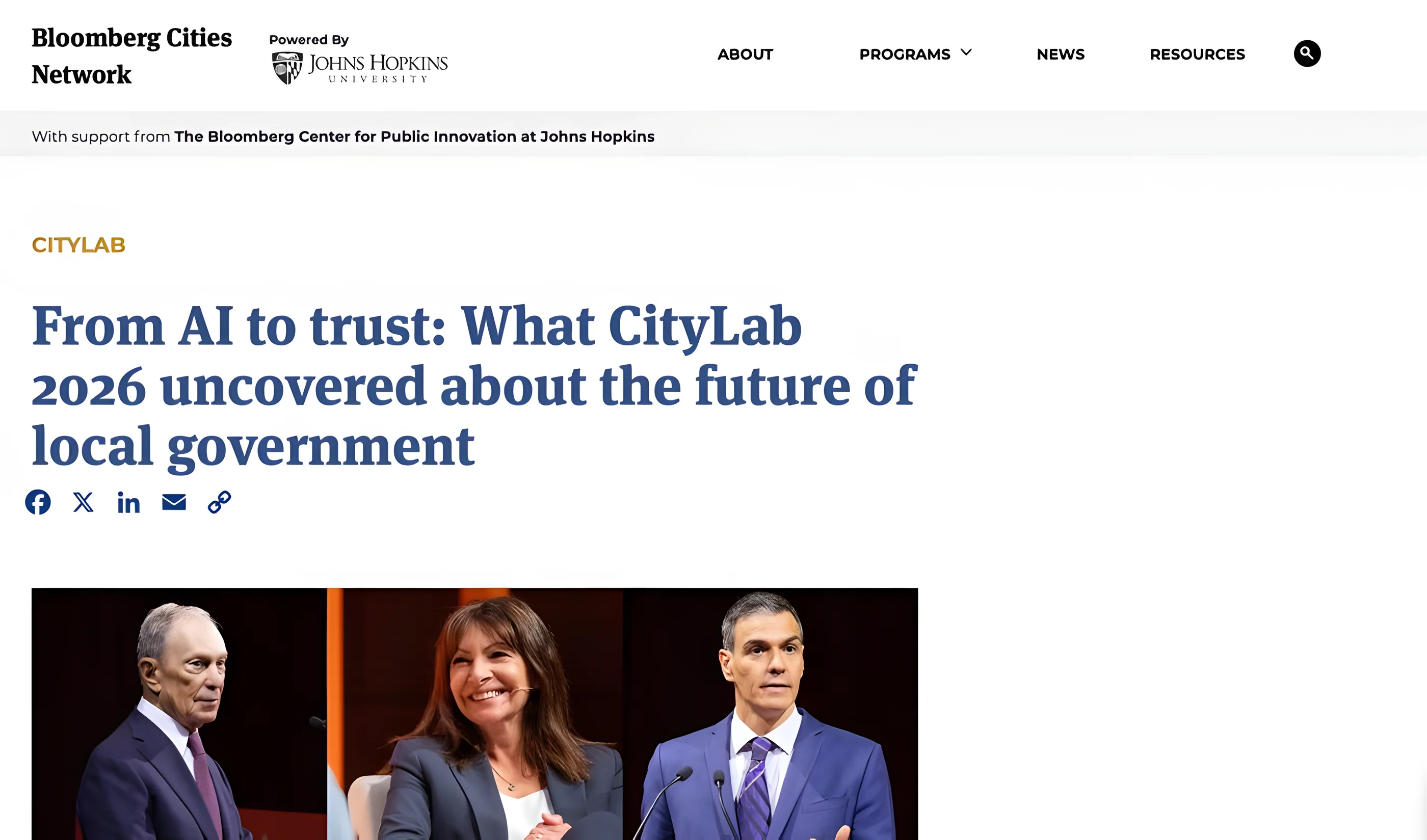
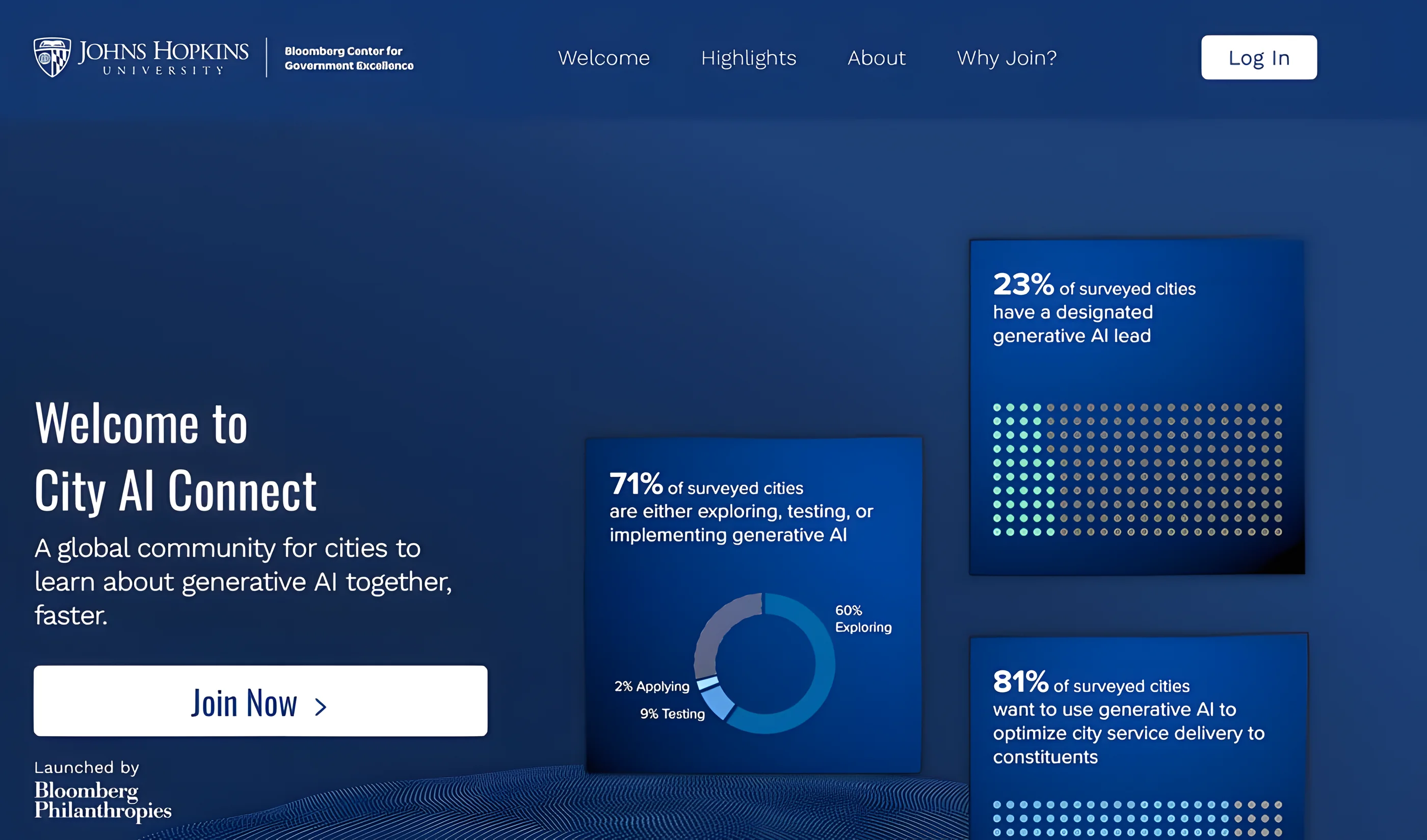
Across development banks, the OECD and city networks, the same finding keeps surfacing: put the tools in the hands of the people who run the service, and use AI to widen participation — not to replace it.
 The Siegestor, reimagined — 3,000+ ideas, ~300 votes.Dubai Municipality co-planning session.The city centre by the lake — vision feeding strategy.A green low-rise neighbourhood for the new capital.Residents reviewing design boards at the Biloku workshop.Open-house co-design with tablets.
The hard problems agencies bring us
One process that holds every stakeholder — deep in the room, wide across the population. Compliance and design quality carried as data. Participation that means changing minds in public, not submitting opinions. And speed that comes from front-loading agreement, not faster rubber-stamps.
Four hard problems
The openings participatory AI creates
Each engagement leaves a capability behind, not a report: a configured process the office re-runs freely, reach beyond the weekday-evening room, departments aligned around one picture, evidence both sides can stand behind — and a standing capacity to imagine in public, down to an expo kiosk the public walks into.
Six openings
Four hard problems
Six openings
The path — about two weeks
Every engagement follows the same arc. The office keeps three things: a documented mandate, a configured platform it re-runs on its own, and a trained team.
The path
What you bring to get started
Starting is light — three things. We handle configuration, training, facilitation and the technical translation.
Three things
For participants: one simple, repeating loop
No plans to read, no software to learn. One full loop takes about half a day, drawn from a sixteen-format method library.
The loop
For organisers: source & transform
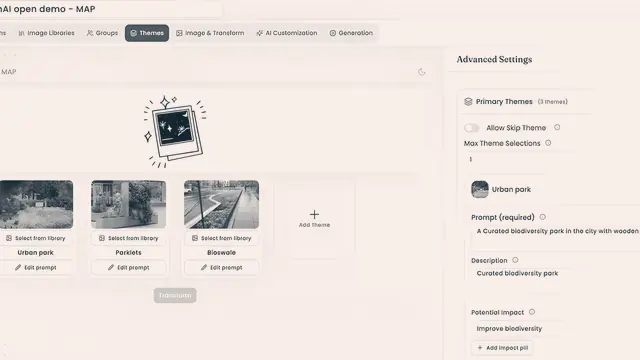
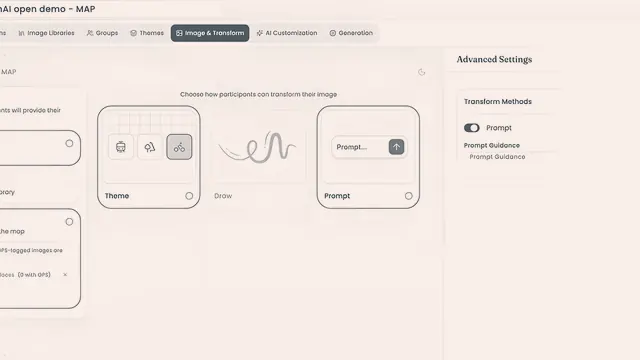
Behind the room you stay in control. Pick where images come from — upload, library or map — and how participants reshape them: theme, draw or prompt.
 Source & transform.
Set the themes
Define the directions on the table — each with its own prompt, description and expected impacts. Aim the agents at local rules, or let them imagine boldly.
 Set the themes.
Steer it live
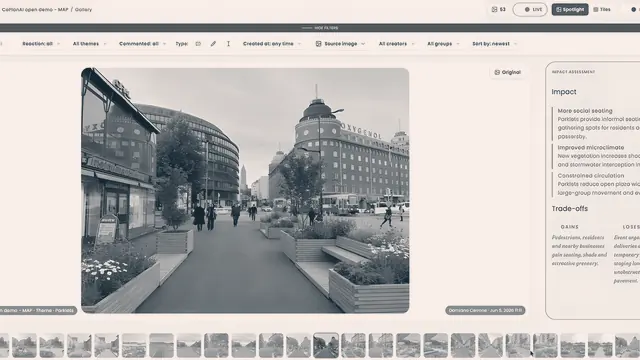
During the session, a live gallery with built-in impact assessment lets you moderate the discussion and watch ideas land in real time.
 The live gallery, with impact assessment.
Three things
Source & transform.Set the themes.The live gallery, with impact assessment.Own the connective layer
A planning decision pulls on the same actors almost everywhere — yet they rarely sit at one table, and the public is usually consulted last. The opportunity is not another plan. It is the connective layer between the actors. No one owns it by default; whoever convenes it sets the standard for everyone else.
What a shared process establishes
The actors in the same visual conversation before positions harden; a method any private plan can be asked to run; and evidence everyone trusts, because every actor worked the same images and votes.
A repeatable standard
How we build that capability with you
Every engagement starts with the office itself — its real workflows, constraints and ambitions. We map how the office plans today, listen for ambition before features, co-design the surfaces, then pilot on one real question. The office stays the author; we build the instrument.
The question we ask planners: what does it mean, now, to be a planner? The compliance-checking goes to the machine; the human work gets the room it never had. Framework developed with 
The office stays the author
Where we usually start: innovation agencies
Our entry point is usually the innovation unit — the team with the mandate to experiment before the line organisation commits.
Innovation agencies
A repeatable standard
The mandate to imagine — together.
Cities are asked to deliver the future. CoPlanAI gives them — and the people they serve — the instrument to imagine it in public, and the evidence to act on it.Book a first call →See the use cases