Use case · 2026 · Sweden
Luleå University of Technology: letting children reimagine their city
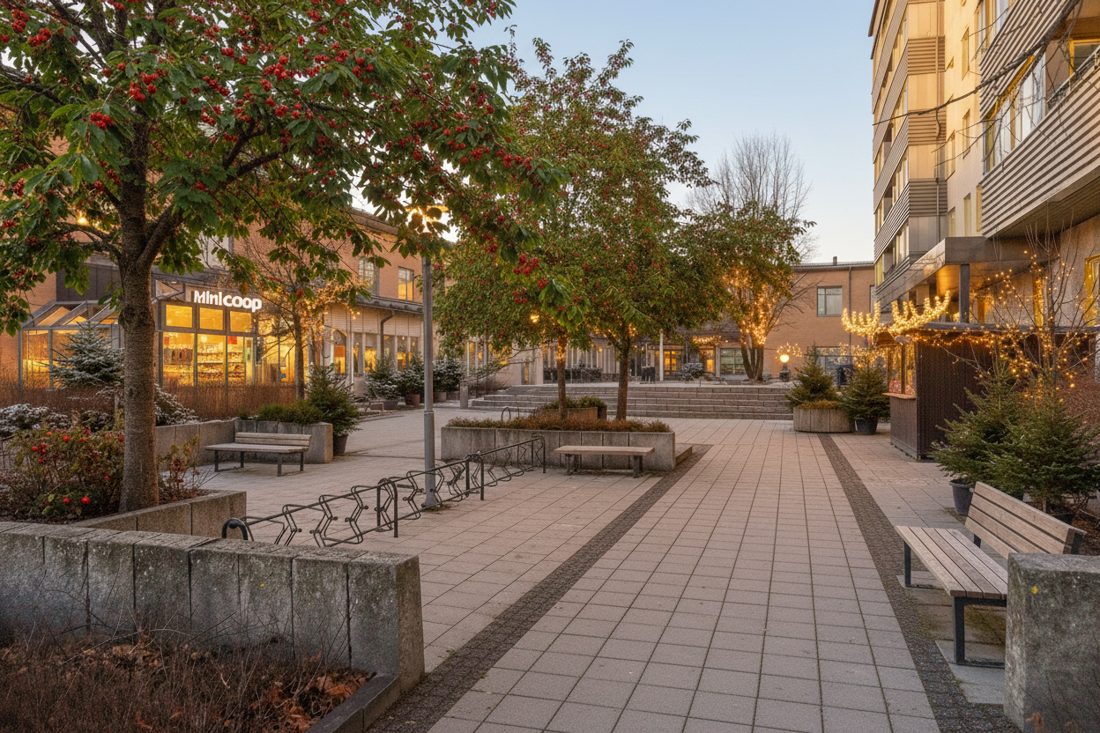
A street the workshop reimagined, and the PhD it started.
On 19 January 2026, schoolchildren at a Luleå school photographed real streets around their city and reimagined them with an AI co-planning tool, working alongside Luleå University of Technology’s architecture department. The workshop became the starting point for an ongoing PhD on bringing children into mobility planning.

Map data © OpenStreetMap contributors
Who took part
Schoolchildren at a Luleå school, working with Luleå University of Technology’s architecture department.
What the tool did
Real streets around Luleå were photographed and reimagined with an AI co-planning tool, producing genuinely plausible urban-design ideas in the children’s own words rather than adult planning language.
What changed
The workshop is now feeding a PhD: Victor Nilsson’s doctoral research at LTU, within SICTA Next Generation Urban Mobility (SICTA-NGUM), is developing a methodology for using generative AI as a digital participation tool — testing whether an AI-driven approach can lower the barriers to engaging groups like children, who are usually left out of mobility planning. A six-part workshop series at a Luleå school has continued the model, with students acting as co-creators and critical evaluators using GenAI and VR to visualise infrastructure changes in real time; the results are now being converted into action proposals with Luleå Municipality.
Delivered together with project partners.
Reports, media and links
On the record.
What others wrote about this work, and where to read more. Each entry opens the original.