
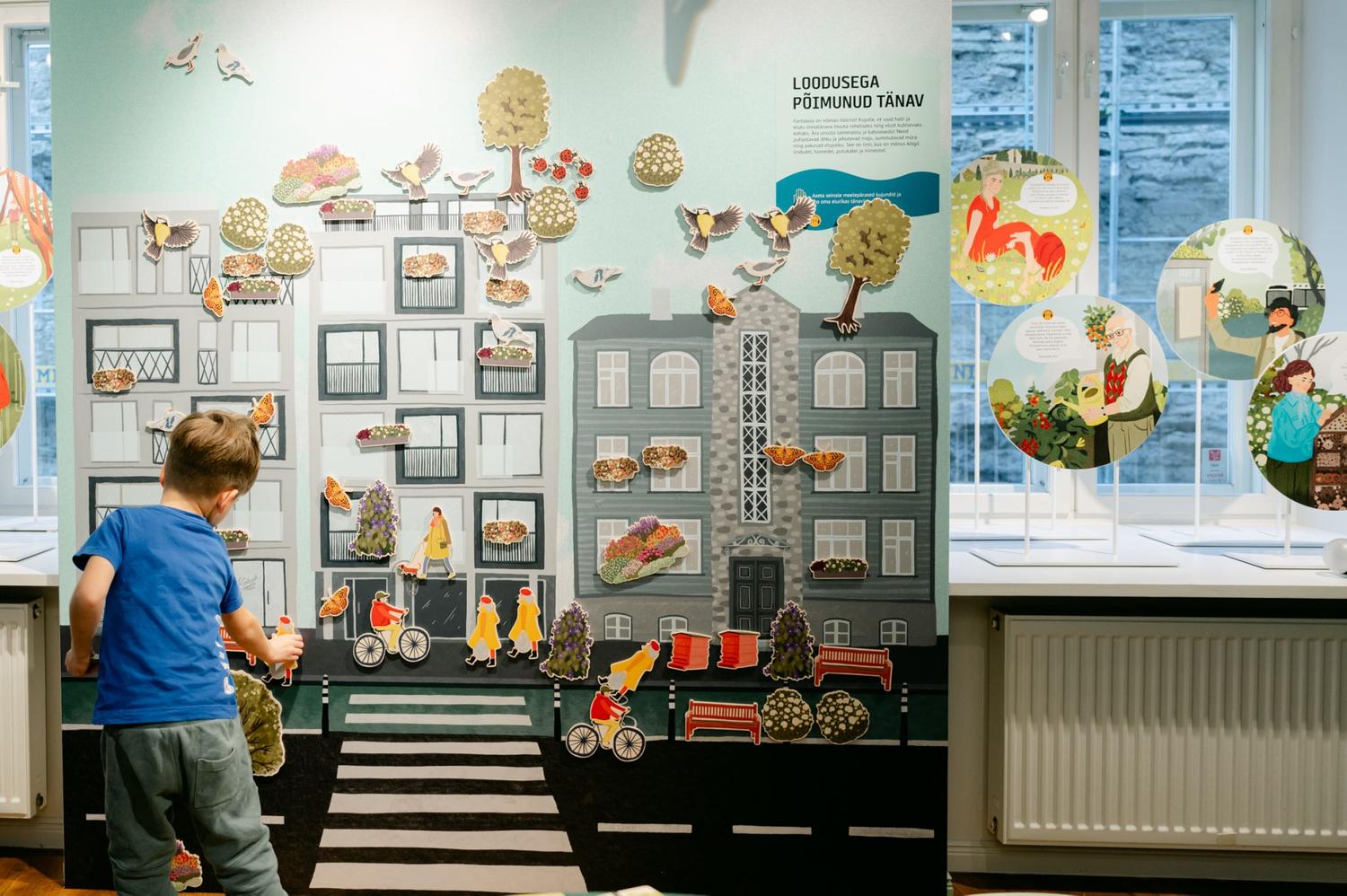
An interactive museum installation helped bridge the gap between urban infrastructure and environmental conservation, inviting citizens to reimagine their city as a nature-rich ecosystem.
Context
Client
Estonian Museum of Natural History
Location
Tallinn, Estonia 🇪🇪
Year
2023
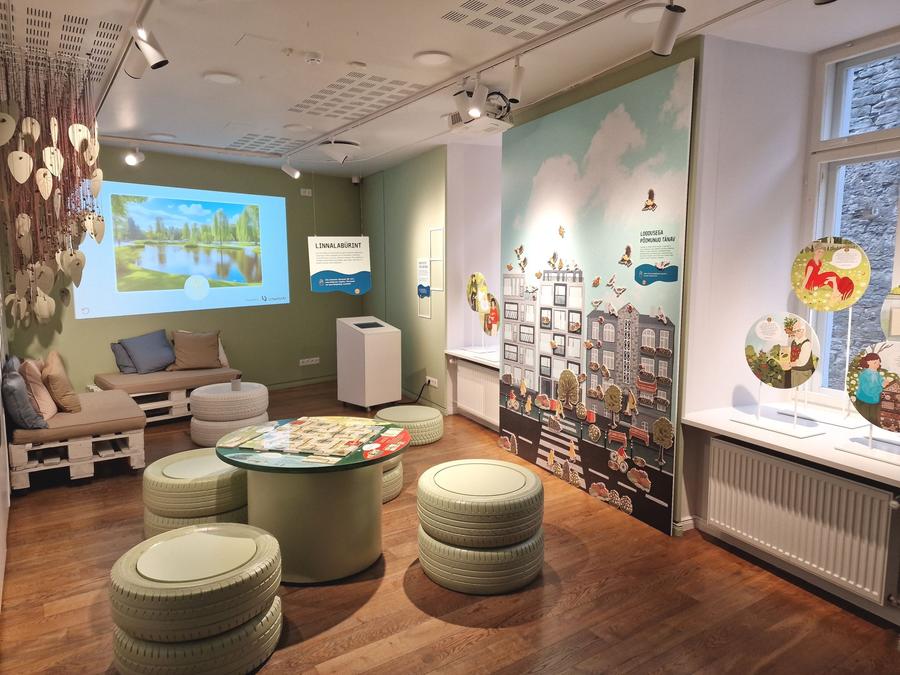
In October 2023, the Estonian Museum of Natural History in Tallinn launched the BiodiverseCity? exhibition, backed by the Tallinn – European Green Capital 2023 program. The exhibition’s core mission was to prompt public reflection on the delicate balance between built environments and the natural world. Organizers needed a way to challenge attendees to look beyond current concrete landscapes and envision an ideal cityscape where biodiversity actively supports and elevates community well-being.
Engagement method
To bring this vision to life, a customized, interactive dual-screen installation — powered by an AI co-planning tool — was set up in the museum. This setup allowed museum visitors to briefly step into the role of forward-thinking urban planners through a highly immersive workflow:
- Site Selection: Users began by choosing a base photograph of a familiar Tallinn location, such as a local plaza, street, courtyard, or park.
- Customization: They then selected various environments and activities they wanted to introduce to the area.
- Generation: The tool instantly processed these choices, crafting realistic visualizations of a nature-friendly urban space.
- Takeaway: To ensure the experience lasted beyond the museum walls, participants were provided with a unique QR code to instantly download and share their newly generated cityscapes.
Impact
The integration of the tool successfully transformed a traditional educational exhibit into a dynamic laboratory for urban innovation.
- Enhanced Public Participation: The intuitive platform allowed visitors of all technical backgrounds, particularly the younger generation, to effortlessly translate their creative ideas into vivid scenarios.
- Deepened Ecological Awareness: By experimenting with their actual neighborhoods, participants gained a practical understanding of why preserving urban biodiversity is crucial for a sustainable future.
- Institutional Innovation: The project proved that cultural institutions, like museums, can leverage tailored generative AI tools to craft entirely new, fresh and engaging narratives, turning their patrons into active co-creators of their city’s future.
Delivered together with project partners.